A small, affectionate guide to being a better guest
There is a particular kind of dinner guest who arrives with a bottle they very much want you to notice.
You can usually spot them before they’ve taken off their coat. The wine is handed over with a small gesture suggesting it requires attention. The label is turned outward. Sometimes there is a knowing comment about the producer. Sometimes the vintage is mentioned. Often, with the best intentions, the price is implied without being stated, which is somehow worse than stating it.
The host, who was halfway through plating, now has to find the right glass, the right moment, the right impressed face. The conversation, once it resumes, will be partly about the wine. Possibly entirely about the wine.
A small confession
Years of working in wine have taught me that the bottles you should never bring to dinner are not the ones you might think.
They are not the cheap ones. A cheerful supermarket bottle, opened generously, has never ruined an evening. They are not the unfashionable ones, the wrong colour, the wrong region, or the wrong vintage. Hosts are forgiving creatures, and any wine offered with warmth is, by definition, the right wine.
The bottles you should never bring to dinner are the ones that demand the evening revolve around them.
This is a subtler crime, and one committed almost entirely by people who love wine, which is what makes it so quietly tragic. They mean well. They’ve chosen something special. And in the process, they have asked the host, very politely, to host the wine.
The offenders
A short, affectionate field guide.
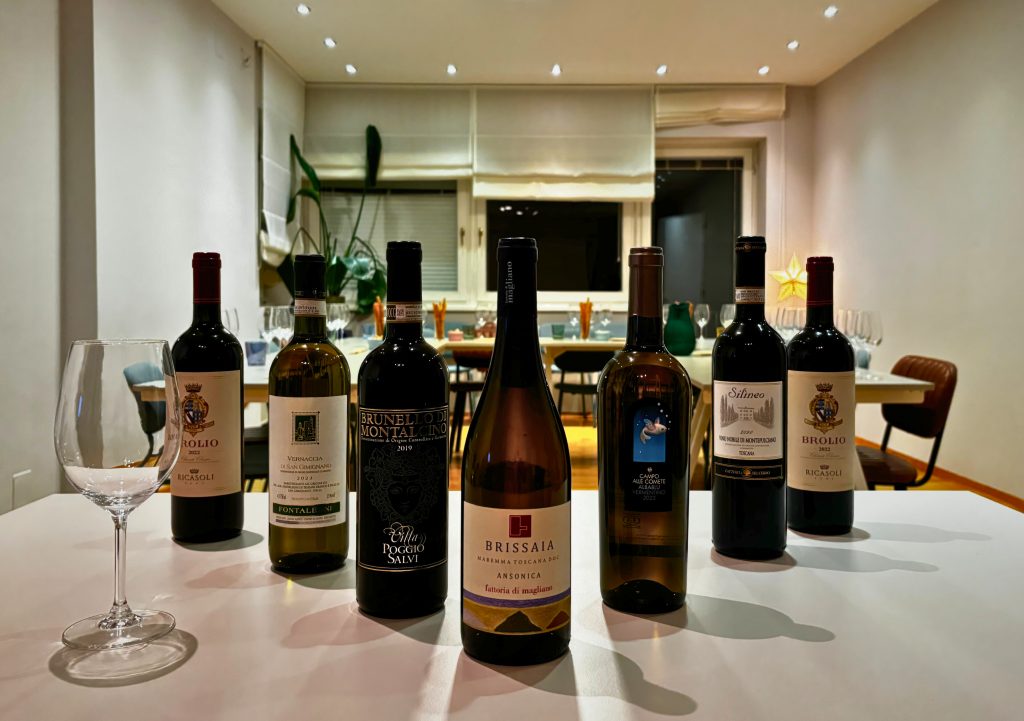
The Statement Bottle. A Brunello di Montalcino. A Grand Cru Burgundy. Something with a label that makes wine people murmur. It arrives with the unspoken implication that the host should now produce the appropriate glassware, the appropriate course, and the appropriate enthusiasm. The host, who was perfectly happy serving roast chicken, has been handed a small problem dressed up as a gift.
The Educational Bottle. Brought by the well meaning enthusiast who has just discovered a new region. “Wait until you try this, it’s so unusual, you’ll never have had anything like it.” The bottle then requires a small introductory speech, a comparison to two other wines you haven’t drunk, and a discussion of soil. The food is now lukewarm.
The Conversation Stopper. The wine so rare or so old or so peculiar that it must be opened slowly, served on its own, and discussed at length. Magnificent, in its way. But it has now eaten the evening.
The Believer’s Bottle. Natural wine. Biodynamic wine. Orange wine that needs explaining. The guest has not come to enjoy the bottle so much as to defend it. By the second glass, the host has agreed to read three articles.
The Apologetic Bottle. The other end of the same spectrum. “It’s not amazing, but…” delivered with a small wince, as though the wine has done something wrong. The host now has to reassure the guest that the wine is fine, which is exhausting for everyone, including the wine.
What the best guests bring
The best wine guests bring bottles that fit comfortably into the evening rather than reshape it.
A wine that the host can pour without thinking. A wine that does not require a different glass. A wine that, three glasses in, the conversation has wandered far away from, because the bottle has slipped into the meal exactly where it was meant to.
This is a quiet skill, and it does not come from spending more money. It comes from understanding that the bottle is not the gift. The gesture is the gift. The bottle is just the carrier.
The exception
There is one. If a host has asked you to bring something special, if they’ve planned the evening around a particular wine, then, by all means, bring the Brunello. Bring the magnum. Bring whatever you like. This is no longer being a guest. This is collaborating on the evening. Different rules apply, the right glasses are already on the table, and everyone has agreed in advance to pay attention.
But unless the host has opened that door, the kindest thing you can do is bring a bottle that simply belongs at the dinner. Not above it. Not below it. With it.
A final thought
And if you’re wondering whether I, as a wine professional, am guilty of any of the above, of course I am. The worst offenders always know exactly what they’re doing.
Wine is a generous thing. It is meant to be shared, not displayed. Hand over the bottle, take off your coat, and let the evening do the rest.
🥂
Option 1 ⭐ (my pick — strongest hook)
By the second glass, the host has agreed to read three articles.
A new piece this week on the wines you should never bring to dinner — and the ones that quietly save the evening. 🥂
💼 LinkedIn Post
There is a particular kind of dinner guest who arrives with a bottle they very much want you to notice.
You can usually spot them before they’ve taken off their coat. The label is turned outward. The vintage is mentioned. The price, with the best intentions, is implied without being stated — which is somehow worse than stating it.
My new piece is a short, affectionate field guide to the wines you should never bring to dinner. Not the cheap ones (those have never ruined an evening). Not the wrong region or vintage. The bottles you should avoid are the ones that demand the evening revolve around them.
For anyone who has ever sat through a small lecture about soil while their food went cold — this one is for you.
📖 Full article below 👇
Be the first to know about our events and workshops.