A small manifesto on taste, humility, and the quiet truth that there is no single right palate
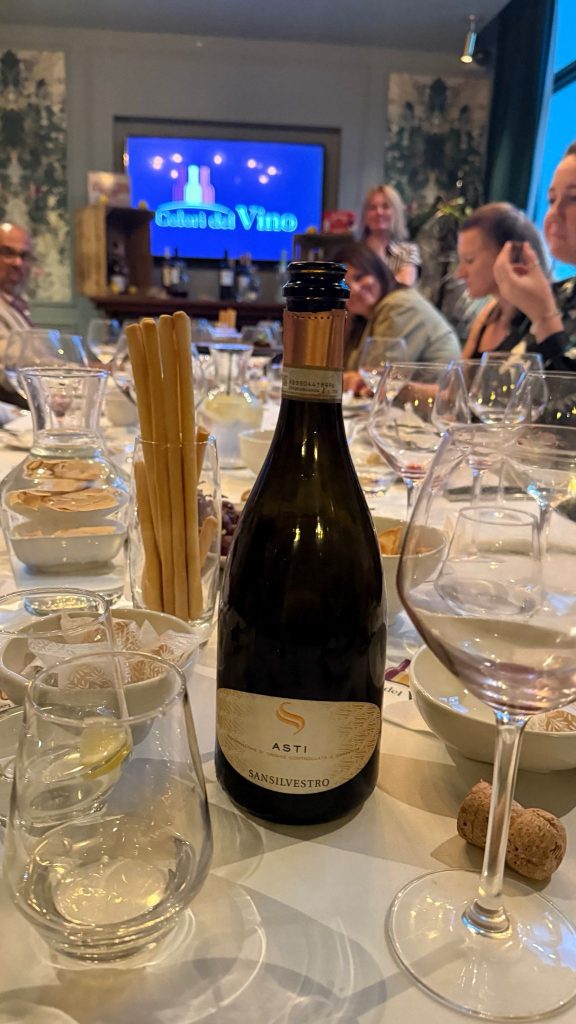
A friend at a dinner party once turned to me and said, lightly, “Lucky you with your posh job.”
I knew exactly what she meant. The wine world, from the outside, looks like a place of velvet ropes and elaborate vocabulary, full of people swirling glasses, sniffing thoughtfully, and pronouncing things in confident French or Italian. It looks serious. It looks expensive. It looks, if we are honest, slightly intimidating.
And in fairness, it sometimes is.
But the strangest thing happens when you actually do this work for a living. The longer you spend with wine, the less interested you become in telling people what they should drink, and the more interested you become in what they actually like. The two are not the same thing. They are rarely even close.
The question I get asked most
At every workshop I run, and at almost every dinner I attend, someone will eventually look at me and ask the same thing.
“What should I drink?”
Sometimes it is phrased more carefully. “What’s good?” or “What would you recommend?” They want me to point at a bottle, hand it to them, and confirm that this is the right choice.
I used to find the question flattering. Now I find it slightly impossible.
Because the honest answer is: I have no idea what you should drink. I have only just met you.
I do not know if you grew up drinking sweetened tea or unsweetened coffee. I do not know whether you find tonic water bracing or unpleasant, whether you put sugar in your espresso, whether you find a ripe peach almost too much. I do not know if your mother poured you a thumbnail of red wine at Sunday lunch when you were eight, or whether you discovered wine in your thirties at someone else’s wedding. I do not know if you are the sort of taster who finds a Cabernet rich and warming, or the sort who finds the same wine “burning.”
These things matter enormously. They matter far more than the colour of the meat on your plate.
What the science actually says
Tim Hanni, a Master of Wine and one of the more quietly subversive thinkers in the trade, has spent decades exploring why people prefer the wines they do. His central observation is gently radical: people are not different in their sophistication about wine, they are different in their physiology. Some of us have many more taste buds than others. Some of us experience bitterness, acidity, and alcohol with a sensitivity that borders on the painful. Others move through the same glass barely noticing what’s there. As Hanni puts it, there is no better or worse palate, just the palate you happen to have been issued at birth, and the cultural and personal history that has shaped what you do with it.
His book “Why You Like the Wines You Like” is the rare wine book that treats the reader as an adult rather than an apprentice. It does not begin with a lecture on tannin. It begins with the proposition that your preferences are valid, even if they cut directly against everything the trade insists is “good taste.”
Some people, he suggests, will always love sweeter wines and there is nothing wrong with this. Some people will find a powerful Barolo magnificent and others will find it harsh. A bone dry Sancerre that one person reaches for again and again will taste, to another person, of nothing but acid and faint disappointment.
None of these tasters is wrong. They are simply different.
It is, when you think about it, an unusually generous idea.
The rules that aren’t really rules
Most of what gets passed off as wine wisdom is, on closer inspection, a series of opinions that have been repeated so often they sound like fact.
Red wine with red meat. White wine with fish. Sweet wine only with dessert. Heavy wines for heavy food. Light wines for light food. And so on, in elegant little couplets, the way wine writing has always preferred its truth.
Some of these guidelines are genuinely useful starting points. Most of them collapse on contact with reality. Hanni himself cites the example of Cahors, in southwest France, where the locals have been drinking their dense, almost black Malbec with delicate butter sautéed trout for several centuries without anyone calling the wine police.
The rules are not the problem. The certainty around them is.
What I actually try to do
When someone asks me what they should drink, I have learned to do the opposite of what I once thought I was supposed to do. I do not start with the wine.
I start with them.
How do they take their coffee? What do they reach for on a hot afternoon? Have they ever loved a wine so much they remember exactly where they were drinking it? Have they ever had a wine they hated and never wanted to try again? Do they prefer their fruit just ripe or so soft it bruises if you breathe on it? Are they drawn to citrus, or do they find it sharp?
These questions sound like small talk. They are actually the most important questions in the room. By the time I have asked four or five of them, I usually have a much clearer sense of what bottle will make this particular person genuinely happy than any classical pairing chart could ever offer me.
This, I think, is the actual job. Not to tell people what is good. To help them find what is good for them.
The posh job, revisited
So when a friend laughs and says, “lucky you, with your posh job”, I always smile, because she isn’t entirely wrong about the optics.
But the work itself, when it’s done properly, is much less about being right and much more about paying attention. It is about asking better questions. It is about resisting the urge to recommend the wine you happen to love and instead trying to find the wine they will love. It is about remembering that the person across the table from you is not an apprentice waiting to be taught. They are an adult with a perfectly working palate and a perfectly valid history, and the most useful thing you can do is meet them there.
The wine world, at its best, is generous. It is curious about people. It does not deal in verdicts.
The rituals around it, the swirl, the sniff, the considered tasting note, have real purpose. Swirling releases aromatic compounds. The careful pause before the first sip lets a wine express itself fully. These are not affectations. But they are tools, not tests. And too often they are mistaken for tests. Small examinations a drinker is meant to pass before they are allowed to enjoy what is in their glass. That is the part worth gently pushing back on.
If you’ve ever felt slightly judged for liking the “wrong” wine, or quietly skipped a bottle because someone made you feel you ought to, this is the part where I would like to gently say: please don’t. Drink what you like. Trust your own glass. The only person whose taste you need to honour is yours.
That is, in the end, the whole point.
🥂
Be the first to know about our events and workshops.