I was speaking with Carlos Santos, Head of Wine at Humble Grape, after visiting two of their London venues. By that point, I already had a sense of the place. The conversation helped explain it.
Humble Grape currently has seven locations across London. I visited Fleet Street and Bow Lane this time, with the remaining five already on my list.
It’s not often that one concept translates consistently across multiple venues. Here, it clearly does.
I’ve been to enough wine bars in London to recognise the pattern. Good design, serious wine lists, and an atmosphere that can sometimes feel like you’re expected to know more than you do.
Here, that expectation never really shows up.
A day that’s never just one thing
Talking to Carlos, what stood out immediately is how varied his role actually is.
There isn’t a typical day.
Part of it is what you would expect. Tasting wines, reviewing samples, deciding what makes it onto the list. And that alone is not a small task. They receive a constant flow of wines, and not everything can or should make it.
But that’s only one side of it.
He’s also involved in building wine lists across different venues, training teams, and running tastings for guests. And increasingly, education is becoming a bigger part of the role, with their wine school and structured workshops.
Knowing the wine is only part of the job. Explaining it in a way that people can actually relate to is where it becomes more demanding.
Starting with the guest, not the wine
One of the things I asked him directly was what kind of experience they want people to have when they walk in.
The answer was very clear. They want people to feel comfortable.
Not impressed. Not intimidated. Just comfortable enough to explore.
That idea shapes everything. The way the team speaks to guests, the way wines are presented, even how the list is structured.
The focus is always on helping people understand what they like, rather than guiding them toward what they should like.
Two venues, same thinking
The Fleet Street venue, tucked away in St Bride’s Passage, feels removed from the pace of the City without trying too hard. The space speaks for itself. High stone ceilings, sandstone arches, and the quiet authority of Christopher Wren’s design.
Bow Lane takes a different approach. Set beneath St Mary-le-Bow Church, within a crypt, it’s more intimate and enclosed, but never heavy. There’s a certain atmosphere to it, just enough to make you settle in and stay longer than planned.
Choosing what stays, and what doesn’t
A large part of Carlos’s role happens behind the scenes.
Humble Grape works with small, sustainable producers, which gives their wine list a very clear identity. But it also means constant decisions.
They receive a high number of samples, and every bottle needs to earn its place.
It’s not just about whether a wine is good. It’s about whether it fits. Whether it makes sense within the list, within the venues, and within the overall experience they are trying to create.
That level of selection is what keeps the offer focused.
Small details that tell you everything
Wines from kegs are part of the offer across all Humble Grape venues.
It’s not something you see everywhere, and in some places it might feel like a gimmick. Here, it’s clearly thought through. The idea is simple. Lower carbon footprint, less waste, and a more efficient way of serving wine, without compromising on quality.
As they put it on their menu, keg wine comes with a carbon footprint so small it’s practically wearing ballet pointe shoes. A line that stays with you, for the right reasons.
It’s a small detail, but it says a lot. Not just about how they serve wine, but how they think about it.
In practice, the selection includes both red and white wines from Italy and Spain. At Bow Lane, this meant a Chardonnay and a Merlot from Veneto, produced by Cantine Borga.
Why it works
By the time I left, what stayed with me wasn’t a specific wine or a tasting note.
It was how natural everything felt.
That doesn’t happen by chance. It comes from clear decisions. From how the wines are selected, how the team is trained, and how the experience is structured from the start.
After speaking with Carlos, it’s clear that this is intentional.
The goal isn’t to simplify wine. It’s to remove the parts that make people hesitate in the first place.
And once that hesitation is gone, everything else becomes much easier.
If you find yourself in London, Humble Grape is absolutely worth seeking out. Not just for the atmosphere, but for the way they approach wine as a whole.
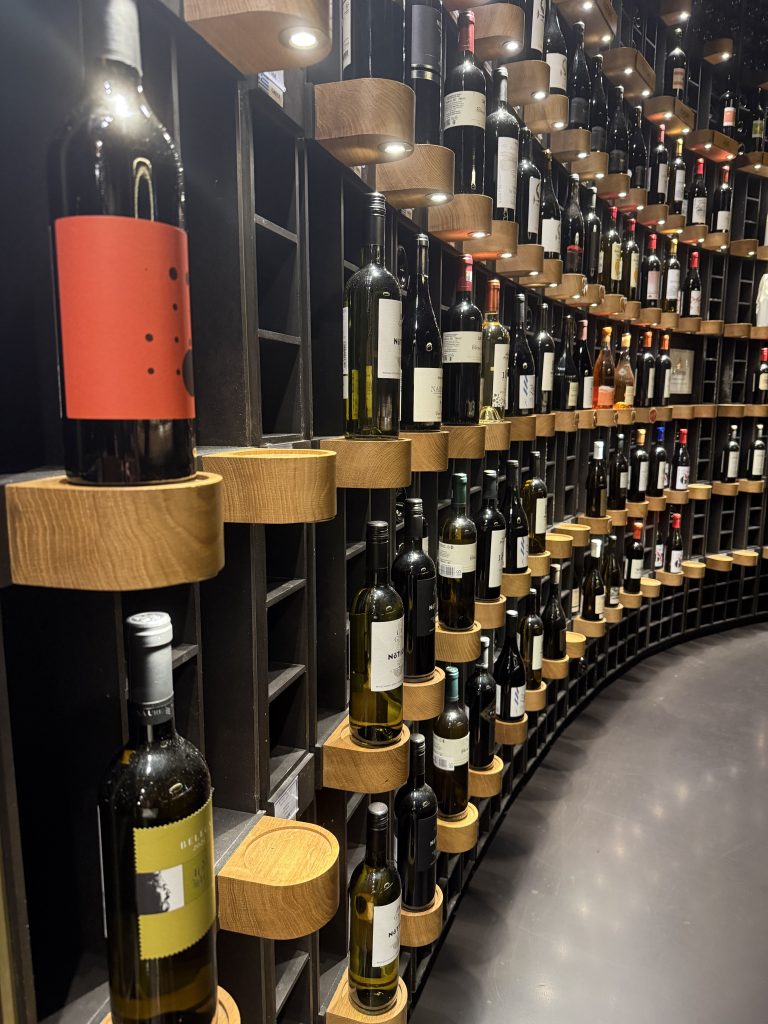
Their wine list reflects that thinking. As they put it, they may be humble in nature, but their producers are anything but. The focus is on organic wines, sourced directly from independent winemakers who work sustainably, with a clear sense of responsibility behind every bottle.
It’s a list that feels considered, not assembled.
I was also pleased to spot a few wines from our region. I’ll be watching the list closely, it feels like only a matter of time before a Croatian label finds its place. No pressure, of course.
Cin Cin!
Be the first to know about our events and workshops.