There are two ways to arrive in Verona.
The first is the way most people do it: off the train, straight to Piazza Bra, immediate selfie with the Arena, then a brisk march to Juliet’s balcony to leave a love letter for someone who didn’t ask for one. By midday, you’ve ticked the boxes, eaten something perfectly fine, and started wondering what the fuss was about.
The second way is to arrive without an itinerary. To walk along the Adige until the river bends, then bend with it. To accept that Verona is, on most spring afternoons, fairly overrun, and to discover, with quiet satisfaction, that it doesn’t matter at all. The city is generous enough to absorb every coach party that descends on it and still leave you a quiet courtyard, a half empty wine bar, and a piece of late-afternoon light on a stone wall that nobody else seems to have noticed.
I come back every year for Vinitaly. By now Verona and I have reached a kind of polite understanding. I show up in early April with a luggage tag full of optimism, the city pretends it hasn’t seen me before, and we both have a wonderful time.
A small confession about Juliet
Let us deal with this first, because there is no way around it.
Yes, there is a House of Juliet. Yes, there is a balcony. Yes, there is a small bronze statue of Juliet in the courtyard whose right breast has been polished to a high shine by the hands of every visitor who believes, touchingly, persistently, against all available evidence , that this gesture will improve their love life.
The house genuinely belonged to a medieval family called the Cappelletti, which Shakespeare borrowed and Anglicised as Capulet. The balcony, however, was added in the 1930s to give the love letters somewhere to be addressed to. It is, in other words, a piece of theatrical infrastructure built to accommodate a fictional couple who never lived there because they never lived anywhere. One has to admire the commitment.
The Veronese, to their immense credit, treat all of this with the gentle weariness of people whose ancestors built a great city and now find themselves curating a fan-fiction shrine. They keep the courtyard tidy. They sweep up the love letters. They do not, as far as I can tell, roll their eyes , though one suspects they save it for after closing.
You should still go. It is small, it is strange, and it is very Verona: a city happy to be famous for the wrong thing, provided you stay long enough to discover the right ones.
What the city is actually for
Verona is two thousand years old and has been almost everything: a Roman municipality, an Ostrogothic outpost, a Lombard town, a Carolingian holding, a Scaligeri stronghold, a Venetian possession for four centuries, a Napoleonic prize, an Austrian one. UNESCO declared it a World Heritage Site in 2000, which it accepted with the polite shrug of a city that had been heritage for considerably longer than UNESCO had been an organisation.
The Arena, on Piazza Bra, was built in the first century AD to host gladiatorial combat, an entertainment industry that has since been replaced, in roughly the same building, by Aida. The first opera was staged here in 1913. The acoustics, designed for a crowd watching men kill each other, turn out to be rather wonderful for Verdi. Make of that what you will.
Walk five minutes from the Arena and you reach Piazza delle Erbe, the oldest square in the city, built on top of the Roman forum, which was itself built on top of an even older market. There has been someone selling things to someone else on this exact patch of ground for somewhere over twenty-one centuries. The current generation of stallholders sells fridge magnets and limoncello to tourists, and I refuse to find this depressing. It is the same instinct, slightly worse vegetables.
Above the square rises the Torre dei Lamberti, which you can climb (368 steps) or take the lift to (zero steps, no judgement either way, though one option does come with a stronger sense of moral accomplishment). From the top, you can see the Roman Theatre on the other side of the river, the green hills of Valpolicella in the distance, and the curve of the Adige bending the city into its particular shape. This is the moment, usually, when Verona quietly works on you.
Cross the Ponte Pietra, the only Roman bridge in the city, painstakingly rebuilt after the war using the original stones fished out of the river, and the crowds thin almost instantly. Up the hill, the Roman Theatre. Down the river, the Castelvecchio: the moody Scaligeri castle that now houses one of the loveliest small museums in northern Italy. Most coach tours never make it this far. One suspects this is, on Verona’s part, entirely intentional.
Quiet corners (a partial list)
Verona is busy. Verona is also, somehow, not. The trick is to walk one street further than the guidebook suggests.
Behind Piazza delle Erbe, a network of small lanes opens up, quiet courtyards, hidden cafés, the occasional artisan whose grandfather did the same job in the same room and whose grandson, presumably, will do it after him. The riverbank below the Castelvecchio at sunset is almost empty even in high season. The neighbourhood of Veronetta, across the Adige from the Arena, is where actual Veronese live and eat, and where prices drop by about a third the moment you cross the bridge, a fact one prefers not to dwell on. The cloister of Sant’Anastasia. The garden of Palazzo Giusti. The small courtyard behind the Duomo, around six in the evening, when the light goes Venetian gold and you can briefly pretend you live there.
Go looking for these. The city rewards wandering far more than it rewards planning, and tends to look quietly amused at anyone holding a map.
Now, the wine
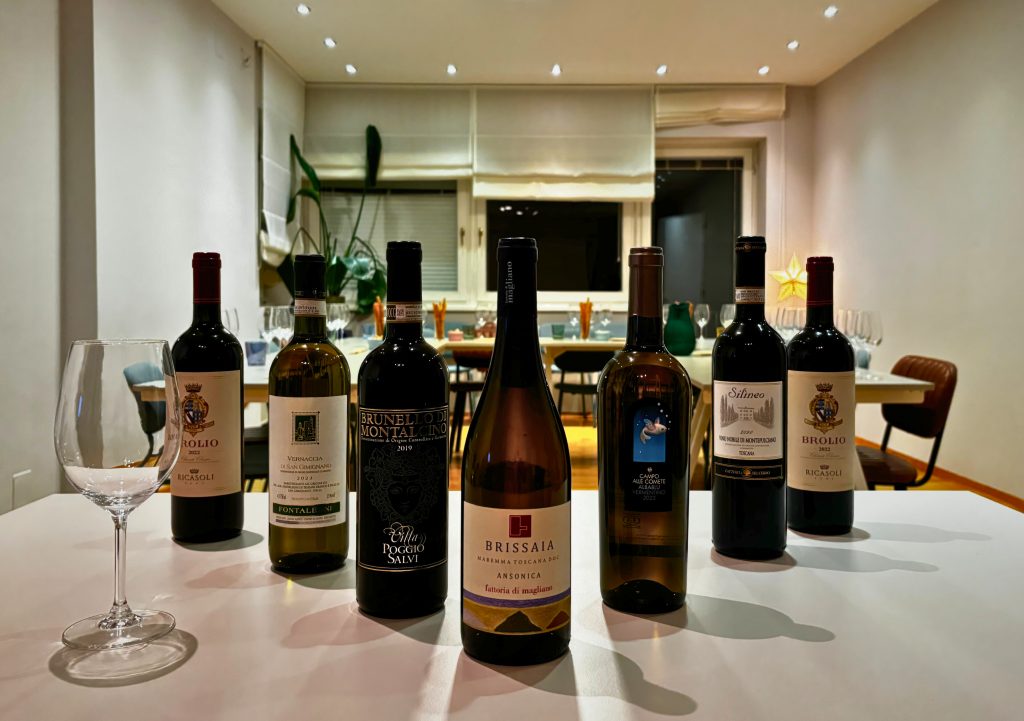
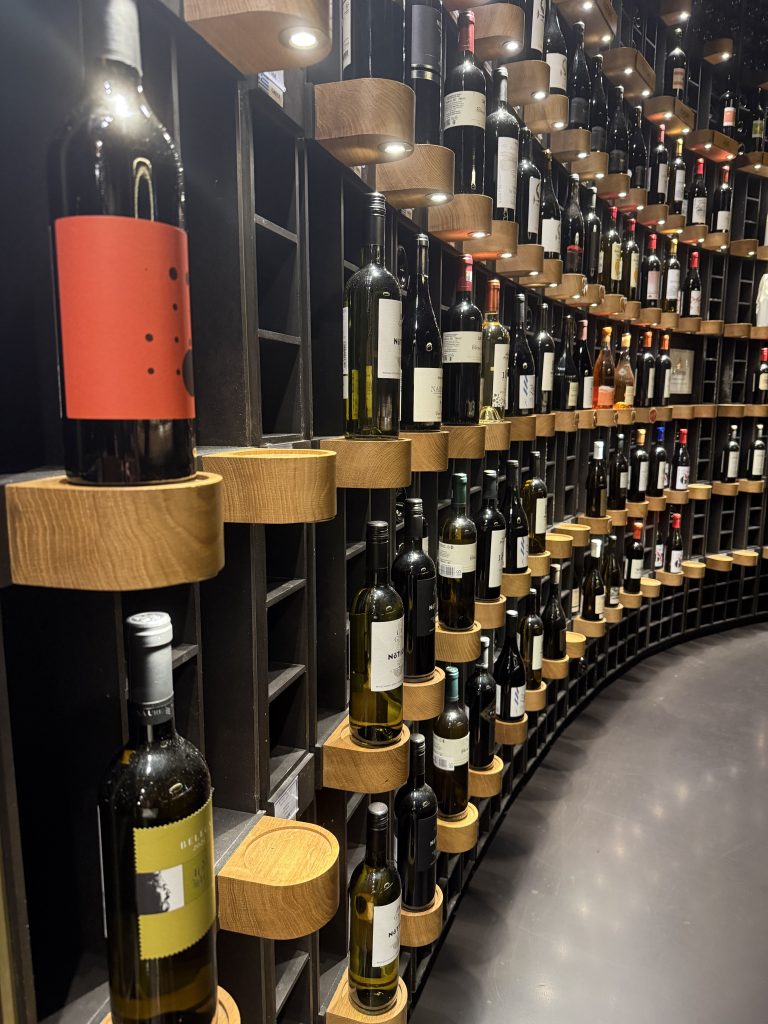
Verona sits at the centre of one of the great wine regions of Europe, and you can taste it in everything the city eats.
To the north, the Valpolicella hills produce some of Italy’s most quietly serious reds. The everyday Valpolicella is fresh and gentle, a young, food-friendly red that has been unfairly dismissed for decades by people who only ever drank the supermarket version, which is rather like judging Italian food by airport pizza. The proper stuff, from a small producer, is something else entirely.
Then there is Amarone, the king, and well aware of it. Made from grapes dried for months on bamboo racks until they are half-raisin, then fermented to a powerful, brooding red that smells of dried cherries, leather, and tobacco and tastes like late autumn distilled into a glass. It is a wine that asks for cold weather, slow food, and good company. Pair it with stracotto, with osso buco, with anything braised long enough to fall apart at the suggestion of a fork.
If you only eat one thing in Verona, eat the risotto all’Amarone. Made with Vialone Nano rice, a stubby, starchy local variety grown in the marshlands south of the city, and finished with a generous splash of Amarone, it turns the colour of a bishop’s robe and tastes like nothing else on earth. It is the dish that makes the most sense of where you are.
Beyond the famous reds, the region produces Soave (an underrated white that has been quietly improving for years and may, sooner or later, get the credit it deserves), Bardolino (the cheerful pink that nobody takes seriously and everyone enjoys, which is in itself a sort of triumph), and Custoza (a blend that drinks beautifully on a hot afternoon by the lake and is best appreciated horizontally). Lake Garda is twenty minutes away and produces an extra-virgin olive oil so delicate it tastes almost of fresh almonds, buy a small bottle, take it home, and watch it quietly elevate every salad you make for the next six months.
Where I always go back
Bistrot Con Amore Cucina e Vini is the place I keep returning to. Small, unpretentious, beautifully run, with a wine list deep enough to lose an evening in and a kitchen that takes itself seriously without ever, mercifully, taking itself too seriously. It is the kind of restaurant where the staff remember your face by the second visit and your order by the third, which is, I have come to think, the only useful definition of a great trattoria.
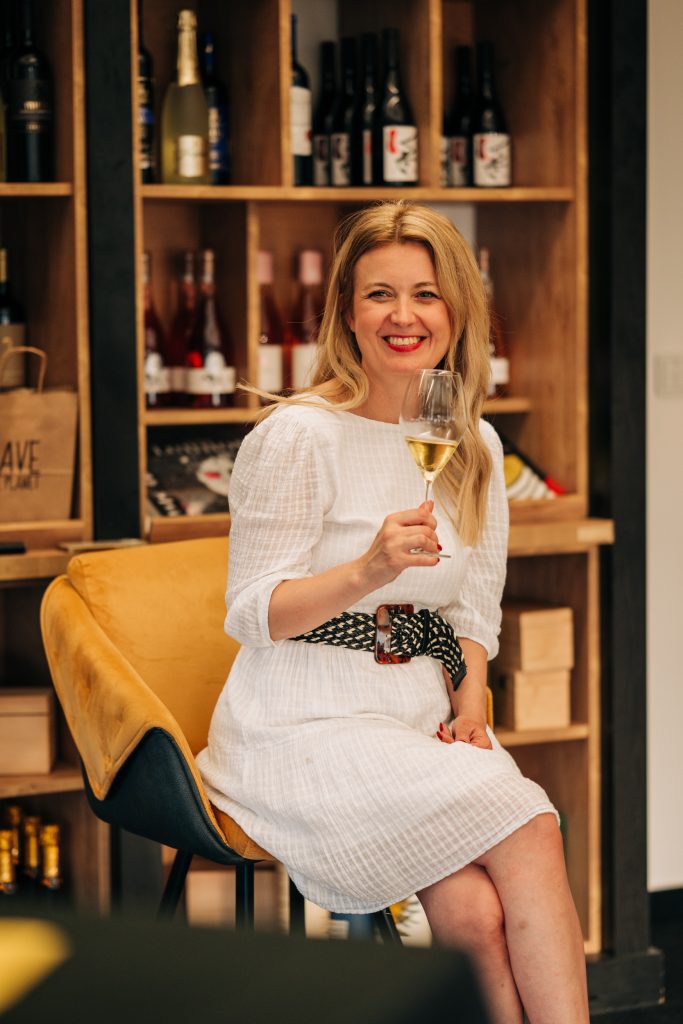
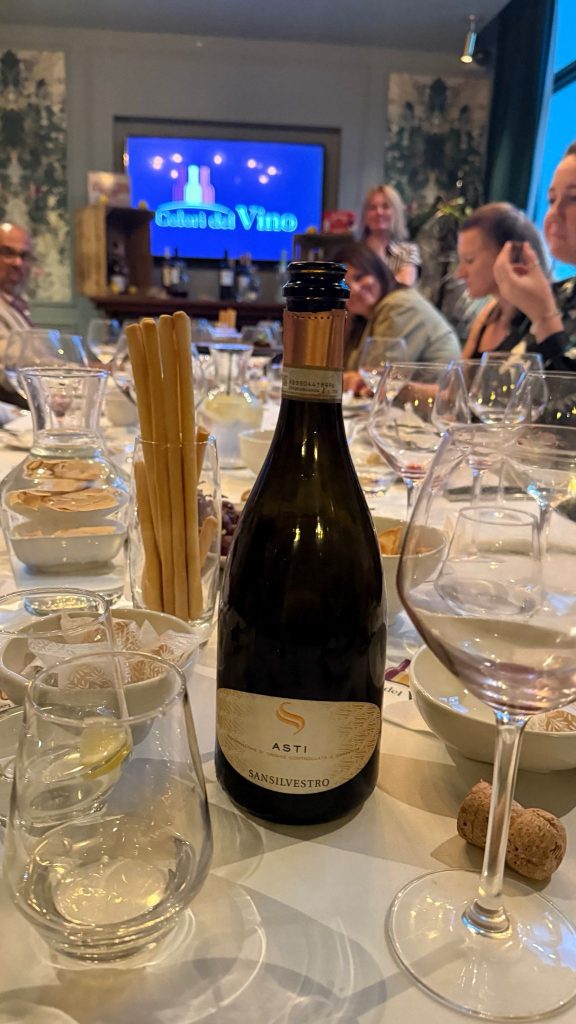
I was certified as an Italian Wine Ambassador at Vinitaly Academy in 2025, an experience that taught me, among many other things , that Italians approach wine education with the kind of considered seriousness that most cultures reserve for matters of state. After a week of tastings, lectures, and surprisingly heated debate about the precise vinification of a single grape, you leave Verona understanding wine slightly differently. You also leave hungry.
A final thought
Verona is one of those cities that is best at slightly the wrong pace.
Too fast, and it becomes a checklist: Arena, balcony, Piazza Bra, photographs, done. Too slow, and you begin to feel mildly trapped by the postcard of it. But somewhere in between, somewhere around the speed of a long lunch and a slightly aimless afternoon, Verona gives you the thing it actually has to offer, which is not Romeo and Juliet at all, but a small, ancient city that knows exactly what it is and is happy to wait until you catch up.
A glass of Amarone helps. So does a willingness to walk one street further than you meant to.
Cin Cin!
Be the first to know about our events and workshops.